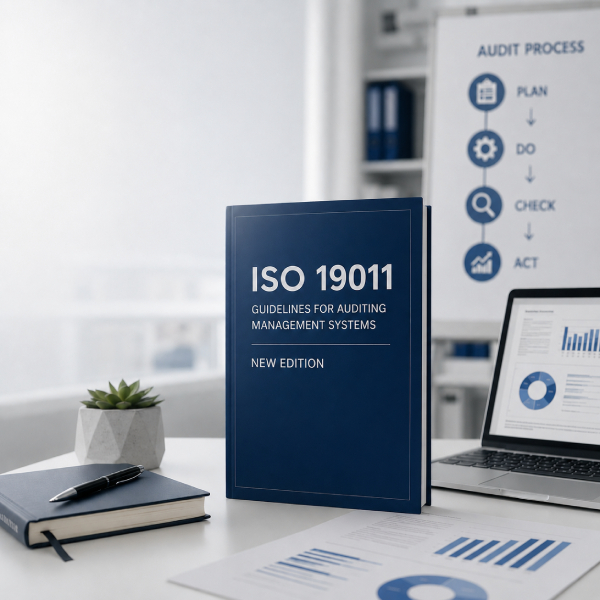
ISO 19011: New Edition of the International Guidelines for Auditing Management Systems
On 27 May 2026, the International Organization for Standardization (ISO) published a new edition of ISO 19011, Guidelines for auditing management systems, replacing the previous ISO 19011:2018 edition.
The document provides guidance on planning, conducting, and managing management system audits and is widely used by auditors and certification bodies around the world.
What’s New?
The new edition does not change the fundamental principles of auditing. Instead, it updates and expands the guidance to reflect today’s business environment and technological developments. Particular attention has been given to:
- remote and hybrid audits;
- the use of digital technologies and electronic evidence;
- risk-based audit planning;
- the management of audit programmes in complex and multi-site organizations;
- the competence and evaluation of auditors and audit teams;
- improving the effectiveness and added value of audits.
Particular emphasis has also been placed on practices that have become part of everyday auditing in recent years, including the use of online meetings, shared electronic documents, remote access to records, and combined audit models.
The new edition provides clearer guidance on applying these approaches while maintaining the reliability of audit conclusions.
How Will It Affect Certification Audits?
For certification bodies, ISO 19011 remains the primary source of good auditing practice for planning and conducting management system audits. The updated guidance will support Smart Certification in making even more effective use of remote auditing techniques, improving the management of audit programmes, and applying a more consistent approach to evaluating auditor competence.
What Does This Mean for Certified Organizations?
For our clients, the publication of ISO 19011:2026 does not introduce new requirements for their management systems. Organizations will continue to be audited against the applicable editions of standards such as ISO 9001, ISO 14001, ISO 45001, ISO/IEC 27001, and others. Clients may, however, gradually notice a broader use of digital tools, more flexible approaches to audit organization, and a stronger focus on risks, processes, and management system results. This reflects the natural evolution of auditing practices and is intended to deliver greater efficiency and added value for both audited organizations and interested parties. As a certification body, we update our internal methodologies, procedures, and auditor training whenever necessary. Our objective remains unchanged—to conduct impartial and effective audits that build confidence in certified management systems and support their continual improvement.